



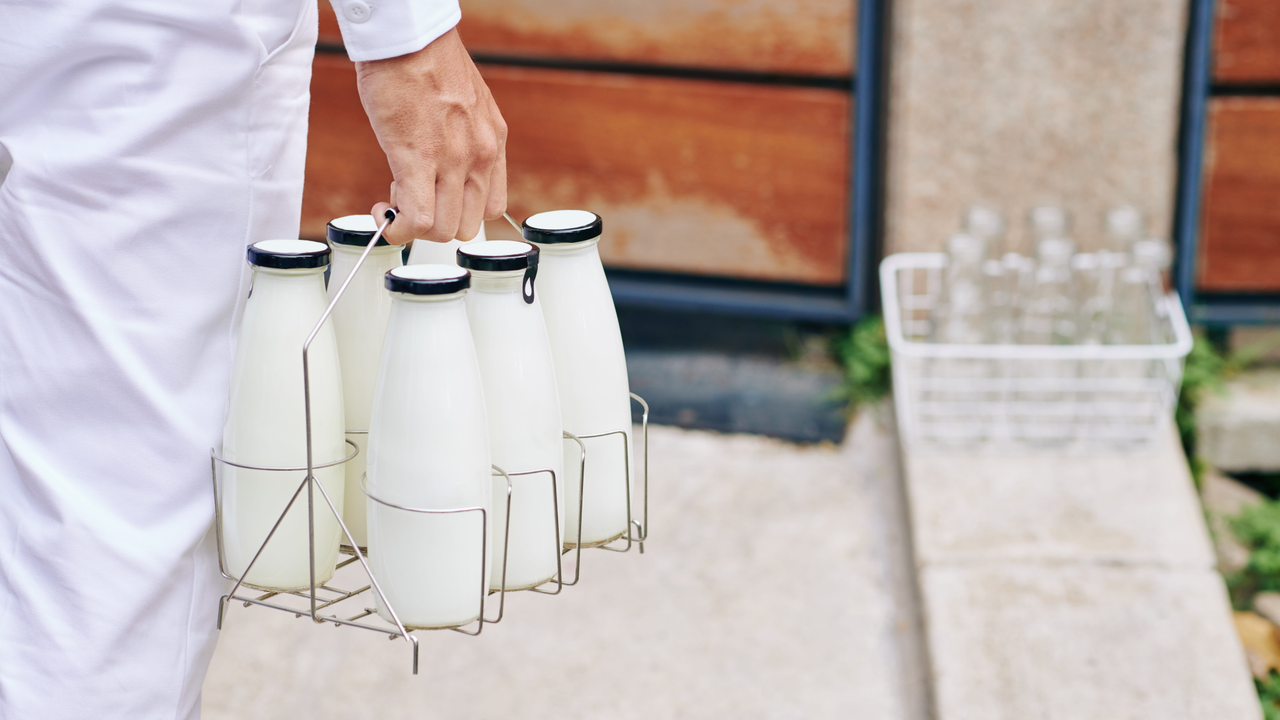
A milk tanker can leave a farm full while the dairy business behind it slips further into debt. The cows have been milked, the collection has arrived, and the customer will soon receive their order. Everything appears to be working, and the world continues spinning upon a range of dairy items. Our farmer, however, may be paying out of pocket to keep it that way.
That is the uncomfortable meaning of producing milk below cost. Ahead of October’s Welsh Dairy Show, NFU Cymru warned that some farmers were doing precisely that. Rising costs were eroding already narrow margins, leaving businesses to supply an essential product on terms that weaken their ability to continue.
Those losses do not stay behind the farm gate. They put pressure on an industry whose profitability already leaves little room for inflated expenditure.
An industry with no space for error
Plimsoll’s Dairy Products Industry Analysis of 573 leading dairy produce companies puts average sales growth at 4.8% and average profitability at just 1.9%. It identifies 164 companies in financial danger and 83 making losses for a second consecutive year.
These figures cover dairy product businesses rather than a census of farms. They do not measure farm production costs or establish the cause of each company’s difficulties. They reveal how little financial room there is to absorb another commercial shock.
The picture is uneven. Plimsoll’s Diary Products Industry Analysis records 295 companies increasing sales, 215 selling less and 53 growing by more than 10%. It also identifies 257 among the strongest profit performers. Successful businesses sit alongside substantial pockets of weakness.
Rising turnover alone offers little reassurance. Extra sales can tie up more money in stock and unpaid invoices, leaving little cash to strengthen the business. Growth must earn its keep.
The hidden bill for staying in business
When milk sells for less than it costs to produce, someone must bear the shortfall. Farmers spend reserves, borrow more, or take less out of the business. Continuing to produce can disguise the seriousness of the loss.
Costs also extend beyond today’s invoices. AHDB’s full economic calculation recognises depreciation, unpaid labour and the value of owned land, alongside cash expenses such as feed and wages. A farm can meet its bills while failing to reward family labour or adequately fund replacements for worn equipment.
The age-old Massey Ferguson tractor lasts another winter despite head gasket worries. The parlour upgrade waits. Each postponement buys time, but repeated deferrals leave the business less equipped to improve productivity or persuade the next generation that dairy offers a worthwhile living.
A hypothetical shortfall of 5p per litre across one million litres leaves £50,000 unrecovered annually. Depending on the costs included, that may create an immediate cash deficit or gradually erode the farm’s economic foundations. Neither can be sustained indefinitely.
Higher prices have brought limited relief
Recent milk price rises have bought some breathing space. AHDB’s October outlook records increases through late summer and autumn, largely driven by concerns about securing supplies. Weak commodity markets offered little support, and most processors subsequently held November prices.
Meanwhile, NFU Cymru says the dry summer forced many Welsh farmers to use winter forage early. It reports red diesel costs 50% higher than in September last year and ammonium nitrate fertiliser held around 20% dearer than in February 2026.
Affected farmers must replenish what the summer consumed while paying more to prepare for winter. Exposure varies with contracts, geography and disease risk, but a higher milk price offers limited comfort when the cost of earning it is rising too.
The squeeze travels through the industry
For processors, cheaper raw milk can offer an immediate saving. That saving becomes harder to defend when suppliers cut production, postpone improvements or leave dairy. A factory’s commercial future depends on having milk to process.
Processors have their own bills for energy, packaging and labour. Paying farmers more while selling into weak wholesale markets can squeeze them from both ends, especially when customer contracts prevent them from recovering costs promptly.
If volumes fall, processing plants must spread their running costs across fewer litres. Tankers may travel further between suppliers. What began as a saving on milk can become a more expensive collection network and a less efficient factory.
Feed merchants, machinery dealers, engineers and contractors face the consequences too. A postponed equipment order removes revenue from another business. A request for longer payment terms shifts the financing burden to a supplier. Across a farming district, those individual decisions can add up to a wider cash shortage.
Cooperatives make the relationship especially close, as farmers may own the processing business themselves. Weakness on either side reduces the resources available to support the other.
Fewer businesses mean greater dependence
AHDB estimated that Great Britain had 6,850 dairy producers in April 2026, down 190 from a year earlier. Average production per farm increased as the industry continued to consolidate into fewer, larger businesses.
Larger farms can replace lost output. However, reliance on fewer producers can magnify disruption when one faces disease, financial difficulty, or operational failure.
Scale can improve efficiency, but it also raises the stakes. A bigger herd requires capital, dependable labour and a secure outlet for its milk. Expansion financed on optimistic price assumptions can turn a modest weakness into a larger liability.
Plimsoll’s Dairy Products Industry Analysis identifies 158 dairy products companies as highly attractive acquisition prospects. That signals commercial appeal, not necessarily distress or a willingness to sell. Acquisitions can preserve operations and fund improvements, but their success depends on sustainable earnings. Buying more capacity will not repair inadequate margins.
The industry must pay for its own future
Retailers and food manufacturers should judge suppliers’ ability to keep investing alongside the price of today’s order. A procurement saving that undermines future supply is a poor bargain.
Consumers need affordable food. However, persistent pressure on domestic production can increase exposure to imports and disruption elsewhere. Neither farmers nor households can absorb every cost indefinitely.
Clearer contracts help businesses plan, although they cannot guarantee adequate returns. Defra says the Fair Dealing Obligations for milk require fair, transparent application of price changes; they do not set milk prices.
The task is to agree on how unavoidable costs are shared, how prices respond to changing conditions, and what commitments each party can credibly make. Without that clarity, long-term investment rests on short-term reassurance. Few businesses can build a sound future on assurances that expire with the next pricing decision.
Dairy businesses must scrutinise profitability, borrowing and financial strength against relevant competitors. Plimsoll’s Industry Analysis helps identify where that scrutiny is needed, while current cash forecasts and trading figures establish how much room remains to act.
A healthy dairy industry is tested by whether today’s trade leaves enough behind to pay for tomorrow’s production. Full tankers alone offer little reassurance if the businesses filling them are wearing out their assets and exhausting their owners. Milk may still arrive each morning. The capacity to keep producing it must be paid for.